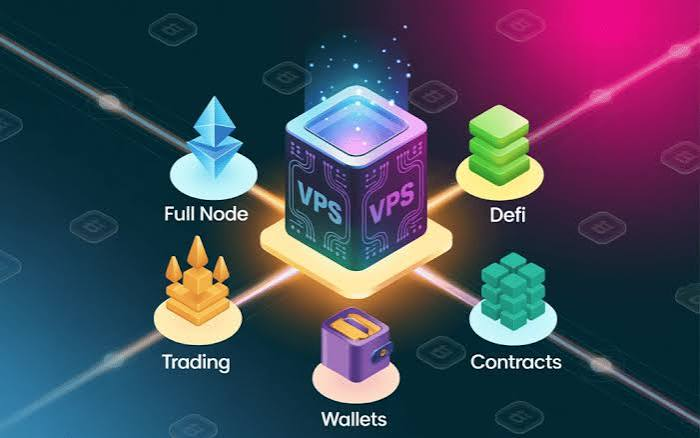

Choosing the right hosting provider is an important step when running websites, applications, development environments, APIs, or other legitimate cryptocurrency-related services. A poorly selected server can lead to slow performance, unexpected downtime, security problems, and difficulty managing growing workloads. For users who need greater control and predictable resources, a Bitcoin VPS can be an effective hosting solution.
However, VPS providers differ significantly in terms of hardware, network infrastructure, security, support, and pricing. Before choosing a provider, it is important to understand which features have the greatest impact on reliability and long-term performance.
Reliable Server Infrastructure
The physical infrastructure behind a VPS has a direct impact on its reliability. A reputable provider should operate servers in professional data centers with dependable power, cooling, networking, and monitoring systems.
When evaluating a Bitcoin VPS provider, look for information about its data center infrastructure and hardware quality. Modern server hardware can provide better performance and efficiency, while redundant infrastructure can help reduce service interruptions.
A provider that invests in reliable infrastructure is generally better positioned to support websites and applications that need consistent availability.
Strong Uptime Record
Uptime is one of the most important factors to consider when selecting a VPS provider. Frequent downtime can make websites inaccessible and interrupt applications or online services.
Providers often publish uptime commitments, but it is also useful to look at customer experiences and independent reviews. A strong uptime history can provide greater confidence that the provider has reliable infrastructure and effective monitoring systems.
Although no provider can guarantee perfect availability, consistent uptime should be a priority when comparing hosting services.
Adequate CPU and RAM
A reliable server needs enough computing resources for its workload. CPU and RAM directly affect how efficiently applications can process requests and manage active processes.
When selecting a Bitcoin VPS, examine the number of virtual CPU cores, available RAM, and the underlying hardware when that information is provided.
Avoid choosing a plan solely because it has a low price. A server with insufficient resources may become slow as application usage increases. Instead, choose a configuration that comfortably meets your current requirements while allowing some room for growth.
Fast Storage
Storage technology is another important consideration. VPS providers may use SSD or NVMe storage, which can provide significantly faster data access than traditional hard drives.
Fast storage can improve website loading, database operations, application performance, and other tasks involving frequent data access.
When comparing providers, consider both storage capacity and storage technology. A plan with sufficient high-speed storage can provide a better overall experience than one that simply offers a larger storage capacity.
Reliable Network Connectivity
A powerful VPS requires a dependable network connection. Network instability can cause slow responses, connection failures, and interruptions even when the server itself is functioning correctly.
Look for providers that offer reliable network infrastructure, sufficient bandwidth, and strategically located data centers.
If your website or application serves users in a particular geographic region, choosing a data center relatively close to those users can also help reduce latency.
Strong Security Features
Security should be a major priority when selecting a Bitcoin VPS provider. Cryptocurrency-related applications and online services may contain sensitive information and administrative credentials.
A reliable provider should offer appropriate infrastructure-level protections and clearly explain its security practices. Depending on the provider, these may include network monitoring, DDoS protection, firewalls, secure data center access, and system maintenance.
However, customers are also responsible for securing their own VPS. Strong authentication, regular software updates, restricted permissions, and secure configurations should be part of the server-management process.
Backup and Recovery Options
Even reliable servers can experience unexpected problems. Hardware failures, software errors, accidental deletion, or incorrect configurations can result in data loss.
For this reason, backup options should be considered before purchasing a VPS. Check whether the provider offers automated backups, how frequently backups are performed, how long they are retained, and how restoration works.
For important projects, maintaining an independent backup in addition to the provider’s backup service can provide additional protection.
Flexible Upgrade Options
Your hosting requirements may change over time. A website may receive more traffic, an application may gain more users, or a database may become larger.
A good VPS provider should offer straightforward upgrade options. Being able to increase CPU, RAM, storage, or bandwidth can help you accommodate growth without immediately moving to a completely different hosting platform.
Scalability can therefore be an important part of choosing a provider for a long-term project.
Operating System Choices
A reliable VPS provider should offer operating system options that are compatible with your intended applications.
Linux distributions are widely used for VPS hosting because they are flexible and supported by a large developer community. Depending on your project, you may require a particular distribution or version.
Having multiple OS choices allows you to build an environment that works well with your software, databases, frameworks, and development tools.
Managed or Unmanaged Service
Consider how much server administration you want to handle yourself. An unmanaged Bitcoin VPS generally gives users extensive control but also requires them to manage updates, security, configuration, and troubleshooting.
Managed VPS services may provide assistance with server maintenance and technical issues. This can be useful for customers who have limited system-administration experience.
Neither option is automatically better. The right choice depends on your technical knowledge, project requirements, and budget.
Responsive Technical Support
Even experienced administrators can encounter unexpected server problems. Responsive technical support can make resolving these issues much easier.
Before choosing a provider, check its support channels, availability, response expectations, and customer reviews. Providers offering 24/7 technical assistance may be particularly useful for services that operate continuously.
Good support is especially valuable when dealing with network problems, server configuration issues, hardware-related incidents, or unexpected downtime.
Transparent Pricing
Pricing should be clear and predictable. Some VPS providers advertise a low initial price but charge additional fees for backups, bandwidth, control panels, IP addresses, or upgrades.
Before purchasing a plan, review the complete pricing structure. Compare the resources included in the package and determine whether important features require additional payments.
The cheapest option is not necessarily the best value. A slightly higher-priced VPS with better infrastructure, support, and reliability may be more economical in the long run.
Clear Acceptable-Use Policies
Before selecting a provider, read its acceptable-use and service policies. Make sure the activities you intend to perform are permitted under the provider’s rules.
This is particularly important for cryptocurrency-related projects because different hosting companies may have different policies regarding blockchain applications, mining, financial services, and other resource-intensive activities.
Understanding the rules in advance can help prevent service interruptions or account-related complications later.
Reputation and Customer Reviews
Finally, research the provider’s reputation. Look for reviews that discuss uptime, server performance, network stability, support quality, and billing practices.
Do not rely on a single review or rating. Instead, compare feedback from multiple sources and look for recurring patterns.
A provider with a long history of reliable service and positive customer experiences may be a safer choice than an unfamiliar company offering unusually low prices.
Final Thoughts
Finding a reliable Bitcoin VPS provider requires more than comparing monthly prices. Infrastructure quality, uptime, CPU and RAM resources, storage technology, network performance, security, backups, scalability, operating system options, technical support, and pricing transparency should all be evaluated.
The best provider is one that offers the right balance between performance, reliability, security, flexibility, and cost. By researching these factors before purchasing a VPS, users can establish a stable hosting environment that supports their websites, applications, and other legitimate online projects both now and as they grow.