
Key Points:
- Outside carrier signal should be measured before booster equipment is selected.
- Floor construction can cause major coverage differences across multi-level facilities.
- Antenna placement should follow real signal conditions, not equal spacing.
- Cable routes and connector quality can directly affect indoor signal performance.
- Busy areas need planning for both coverage strength and user demand.
- Carrier needs should be reviewed before finalizing the booster design.
- Service access matters when placing antennas, splitters, and other equipment.
- Real-workday testing can reveal problems that quiet conditions may hide.
- Clear baseline records make future troubleshooting and retesting much easier.

Large multi-level buildings can make cellular coverage feel unpredictable. A phone may work perfectly by an exterior window, then struggle in a stairwell, lower-level office, or elevator lobby a few steps away. Concrete slabs, steel framing, coated glass, mechanical equipment, and long indoor distances all change how signal travels. So the first planning question is not which booster to buy. It is where usable signal exists, where it disappears, and why.
That distinction matters because one floor can behave nothing like the next. An open office may need broad coverage, while a parking level sits behind heavy concrete and gets almost none. The better approach is to look at signal strength, user movement, carrier needs, cable routes, and future access together. It takes more thought at the start, yes, but it also reduces the chance of fixing one problem while creating another somewhere else.
Cell Phone Signal Planning for Different Floor Conditions
A commercial cell phone signal booster must also be planned around the way each floor is built. Concrete between levels can weaken service sharply, while elevator shafts, stair cores, storage racks, and mechanical rooms may block or redirect signal. Two floors with nearly identical square footage can perform very differently. That is why copying the same antenna layout from level to level is risky. The building itself should decide where extra support is needed.
Usage changes the picture again. A lobby may be crowded for an hour in the morning, then quiet for the rest of the day. A warehouse floor may stay busy through every shift. Those patterns affect where people depend on calls and mobile data most. Instead of treating all square footage equally, a sensible design follows actual activity. Busy areas get attention because they need it, not because they happen to sit in the middle of a floor plan.
Outside Signal Sets the Starting Point
A commercial cell phone booster needs a usable outside signal before anything inside the building can improve. Technicians should measure carrier strength around the property, compare several points, and identify where the cleanest signal is available. The strongest reading may be on the roof, but not always. Nearby structures or rooftop equipment can change conditions quickly. Starting with real measurements keeps the design grounded and prevents the project from being built around assumptions.
For a large facility, one reading is rarely enough. Signal quality can shift from one side of the property to another, especially around taller neighboring buildings or complex rooflines. A donor antenna placed for convenience may capture a weaker source than one only twenty feet away. That sounds minor. In practice, it can affect every floor below. A careful survey gives the design team a much better starting point before cable routes or hardware locations are locked in.
Cell Phone Booster Antenna Placement for Balanced Coverage
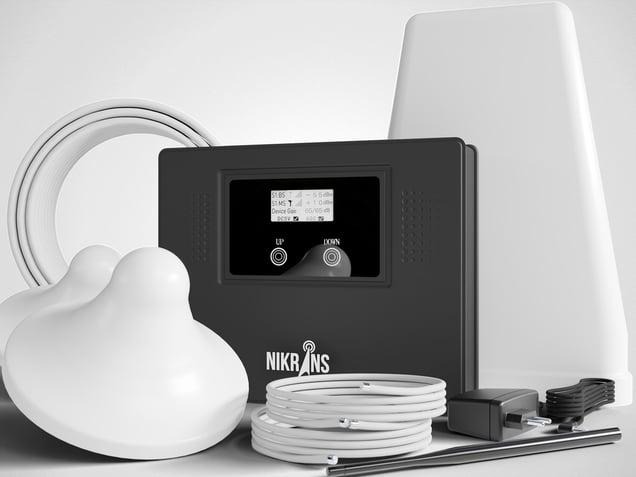
Planning a commercial cell phone booster also means resisting the urge to place antennas at perfectly even distances. Wireless coverage does not behave that neatly. Walls, ceiling height, metal shelving, doors, and room layout all change the result. Sometimes moving an antenna a short distance improves performance more than adding another unit. Good placement comes from measurements and judgment, not symmetry. Neat drawings are useful, but they should never be mistaken for proof that coverage will be balanced.
There is a practical side to placement too. An antenna hidden above a difficult ceiling may work well until someone needs to inspect or replace it. Then a simple service call turns into lift access, after-hours scheduling, and extra labor. Not ideal. A slightly different location can often keep performance strong while making future maintenance far easier. That kind of compromise is usually worth considering in buildings that will stay busy for years.
Cable Routes Can Quietly Change the Design
A commercial cell phone signal booster depends on more than antennas and amplification. Cable length, connectors, splitters, risers, and equipment spaces all influence how much signal finally reaches each area. Long routes can add loss, while sharp bends or poor connections make things worse. Because of that, technicians need to inspect pathways before finalizing the design. The best antenna location on paper may become a poor choice once the actual cable route is taken into account.
Service access should be planned at the same time. Large facilities often have crowded ceilings, locked rooms, and areas that are difficult to shut down during business hours. If every important connection is buried in the least accessible place, future troubleshooting becomes slow and expensive. Clear labels, organized equipment areas, and sensible routes make a real difference later. Small choices during installation can save hours when a technician returns six months after the building is fully occupied.
Busy Areas Need More Than Strong Signal Bars
Coverage and capacity are easy to confuse. A phone can show strong bars and still perform badly when many people are using the network at once. Large facilities may have meeting floors, visitor areas, shift changes, or events that create sudden demand. The design team should understand when those peaks happen and which carriers matter most. Otherwise, the system may look successful during a quiet test but disappoint users during the busiest part of the day.
Carrier use deserves a closer look in multi-tenant properties. One company may rely mainly on a single provider, while another floor has employees spread across several networks. Visitors add more variety. That does not mean every project needs the most complicated solution available. It means the design should reflect who actually needs service. Spending more can improve flexibility, but unnecessary hardware also raises cost and maintenance, so the balance has to be practical.
Testing Should Look Like a Normal Workday
Testing should look like the building on a normal workday, not like an empty shell after everyone has gone home. Technicians can check calls, mobile data, signal quality, and movement between floors, corridors, stairwells, garages, and shared spaces. Quiet testing still has value, but it can hide problems that appear only under real use. A strong closeout test gives property teams something more useful than a simple statement that the equipment turned on correctly.
The building will change later, of course. New walls go up, tenants move, equipment gets relocated, and staff numbers rise. Any of those changes can affect coverage. Keeping floor plans, antenna locations, test readings, and equipment details makes future reviews much easier. If one level starts getting complaints after a renovation, technicians can compare fresh readings with the original baseline. That is faster than treating the entire system like a mystery every time something shifts.
Conclusion
Planning cellular coverage across a large multi-level facility takes patience because the building rarely behaves in a perfectly predictable way. Outside signal, floor construction, antenna placement, cable routes, carrier use, testing, and future access all shape the result. When those factors are considered together, the system becomes easier to install and far easier to support later. More importantly, property teams are less likely to solve one weak area only to discover another problem two floors away.
CMC Communications supports commercial properties with cellular coverage planning, installation, testing, and related network infrastructure services. Their team can review signal conditions, floor layouts, antenna locations, cable routes, and likely growth before recommending a practical setup. That broader view helps businesses avoid rushed hardware decisions and gives them a clearer path for future service, in a large facility, that matters because small planning choices can affect several floors at once, sometimes for years.
Frequently Asked Questions
Question: What should be checked before booster equipment is selected?
Answer: The first step is measuring usable outside carrier signal. Technicians need to know where it is strongest before choosing equipment or antenna locations. Without that information, the design can become guesswork, and indoor results may be uneven.
Question: Why can coverage change so much between floors?
Answer: Concrete floors, steel, elevators, coated glass, storage systems, and room layouts all affect signal movement. One level may work well while the next struggles, which is why floor-by-floor testing matters in larger facilities.
Question: Does adding more indoor antennas always improve coverage?
Answer: Not always. Too many antennas can create overlap or uneven coverage. Site measurements, building conditions, and user activity should guide placement. Sometimes moving one antenna produces a better result than adding another.
Question: Why do cable routes matter during booster planning?
Answer: Cable length and connection quality affect how much signal reaches indoor antennas. Long runs or poor connectors can reduce performance. Routes should also stay practical for future service, testing, and repairs.
Question: When should a large facility test cellular coverage again?
Answer: Retesting is useful after renovations, tenant changes, new walls, equipment moves, or repeated complaints. Earlier test results give technicians a baseline, making it easier to see what changed without reviewing the whole building from scratch.
