
Hello again! Ready to zoom further into the latest blockchain trends 2025? Below you’ll find deeper context plus clear‑cut benefits and drawbacks for every major shift we’re seeing this year.
I’ll keep the language friendly while still giving you the facts, numbers, and book recs you asked for. Enjoy the tour! 🚀
1. Real‑World‑Asset (RWA) Tokenization Matures
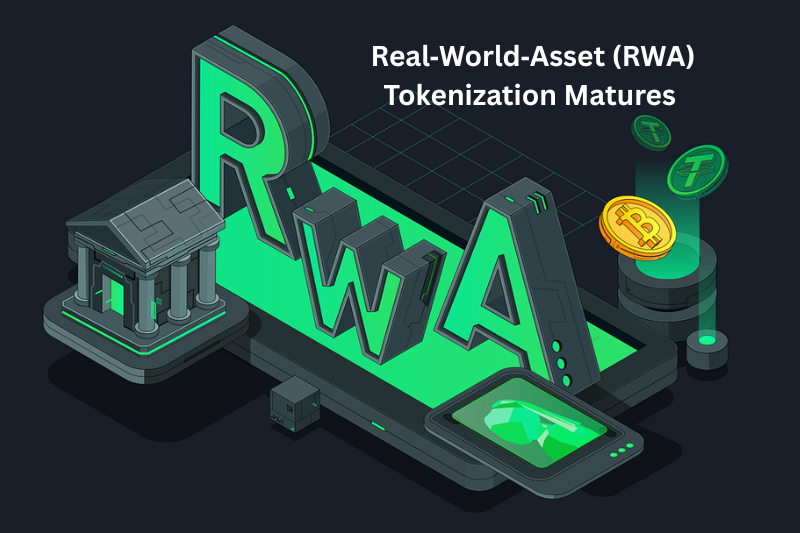
Tokenized U.S. Treasuries, real‑estate shares, even carbon credits are now a multi‑billion‑dollar niche. BlackRock’s BUIDL fund helped push tokenized treasuries up 92 % in under a year, and lending desks now accept tokenized invoices as collateral.
Why it rocks
- Unlocks 24/7 global trading for formerly illiquid assets.
- Fractional ownership lowers entry costs for small investors.
- Programmable smart contracts slash settlement times from T+2 days to seconds.
Watch‑outs
- Patchwork regulation (what’s legal in Singapore may be illegal in the U.S.).
- Custody & hacking risks—2024 saw a $25 m exploit on a mid‑size RWA platform.
- Standards are still fractured, slowing cross‑border liquidity.
2. Enterprise & Government Chains Go Live
From Walmart food traceability to national land registries, permissioned ledgers are moving out of pilot phase
Benefits
- Tamper‑proof audit trails cut fraud and recalls.
- Smart‑contract automation trims manual paperwork.
Drawbacks
- High upfront integration costs—especially painful for SMEs.
- Interoperability headaches between vendor platforms.
3. Central‑Bank Digital Currencies (CBDCs) Close In
A BIS survey shows 94 % of central banks now researching or piloting CBDCs.
Benefits
- Faster, cheaper domestic and cross‑border payments.
- Potential boost to financial inclusion in cash‑heavy economies.
Drawbacks
- Privacy fears: every retail payment could, in theory, be tracked.
- Bank‑run and disintermediation risks if users shift deposits en masse.
4. AI × Blockchain Explodes
Daily unique wallets touching AI‑powered dApps leapt 86 % to 4.5 million in 2025, just behind gaming.
Benefits
- Autonomous “agent” wallets can trade, vote, or fill in forms for you—24/7.
- On‑chain audit trails make AI decisions transparent.
Drawbacks
- Heavy off‑chain computation means many “decentralized” AI apps have central choke‑points.
- New attack surface: poisoned training data can slip past smart‑contract logic.
5. Greener Consensus Mechanisms
Ethereum’s 2022 PoS “Merge” cut energy use ≈ 99.95 %; PoS chains are now the default for new layer‑1s.
Chia’s Proof‑of‑Space‑and‑Time keeps drives idle 99 % of the time, using < 1 % of Bitcoin’s power.
Benefits
- Massive carbon‑footprint reduction—a single ETH tx now uses about the power of making a mug of coffee.
- Renewable‑powered validators attract ESG‑minded capital.
Drawbacks
- Staking centralisation (32 ETH minimum) raises censorship worries.
- “Green” farming can still drive hardware shortages and e‑waste in storage‑heavy networks.
6. Quantum‑Resistant Security on the Horizon
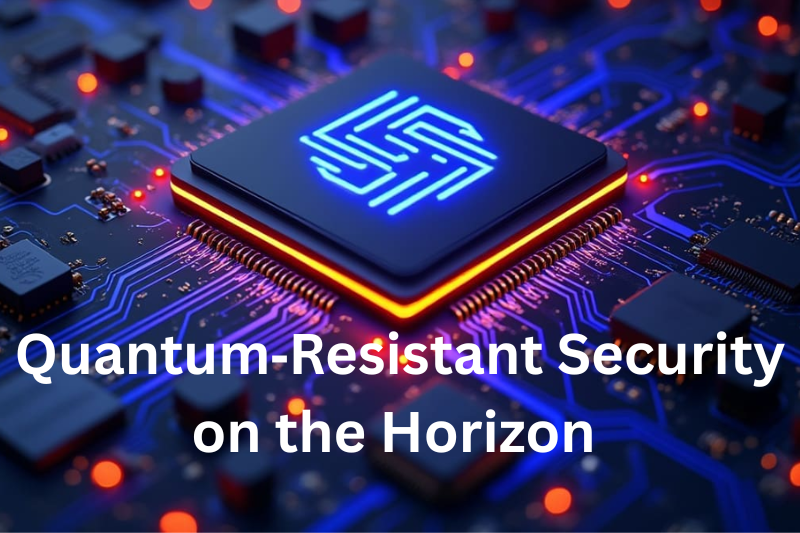
NIST approved algorithms like Kyber and Dilithium in 2024, and blockchains such as QRL already run XMSS signatures.
Benefits
- Future‑proofs ledgers against “Q‑Day” key‑breaking attacks.
- Hybrid signature schemes can be rolled out gradually.
Drawbacks
- Signatures up to 10× larger hurt throughput and storage.
- Protocol upgrades require community‑wide migrations—never easy.
You may also like to read these posts:
https://techloomz.com/wp-admin/post.php?post=63&action=edit
https://techloomz.com/wp-admin/post.php?post=88&action=edit
https://techloomz.com/wp-admin/post.php?post=91&action=edit
https://techloomz.com/wp-admin/post.php?post=96&action=edit
7. DeFi 2.0 & Stablecoin Rules
Lending TVL hit $55 billion in June, an all‑time high, even as regulators tighten screws.
The U.S. GENIUS Act adds audits and reserve mandates for dollar‑pegged coins.
Benefits
- Cross‑chain liquidity pools reduce slippage and boost yields.
- Clearer rules attract pension and insurance money.
Drawbacks
- Over‑reliance on giants like Aave (62 % of lending TVL) creates systemic risk.
- Political tussles—some senators warn the bill still leaves loopholes.
8. Supply‑Chain Transparency
Logistics analysts forecast an 18 % CAGR for blockchain‑enabled tracking platforms through 2030.
Benefits
- End‑to‑end provenance slashes counterfeits in pharma & food.
- Smart contracts automate customs and insurance paperwork.
Drawbacks
- “Garbage‑in, garbage‑immutable”: wrong data stays forever.
- SMEs struggle with tech costs and skills gaps.
9. Decentralised Identity (DID) Wallets
Pilots from the EU’s eIDAS 2.0 to Web3 social apps put DIDs in the spotlight, yet mainstream rollout lags.
Benefits
- Share a zero‑knowledge proof of “I’m over 18” without revealing your passport.
- Fewer data silos = fewer catastrophic leaks.
Drawbacks
- Fragmented standards hamper interoperability.
- Lost private keys can equal lost identity—no “password reset” button.
10. NFT Utility 2.0 & Metaverse Workspaces
NFT ticketing pilots at NBA games and global festivals prove the concept, even if UX friction remains.
Accenture’s virtual campus shows how metaverse offices make training fun—but security and headset costs loom.
Benefits
- Tamper‑proof tickets kill scalping and fakes; royalties flow to artists.
- Immersive corporate campuses cut travel and office‑rent costs.
Drawbacks
- Crypto wallets still intimidate non‑tech audiences
- VR hardware is pricey and data‑privacy laws are still catching up.
Big‑Picture Pros & Cons (Across All Trends)
| 👍 Key Benefits | 👎 Key Drawbacks |
| Faster, cheaper global transactions | Regulatory patchwork & political risk |
| Greater transparency & auditability | Privacy concerns if data is mishandled |
| New revenue models (tokenization, NFTs) | New attack surfaces (smart‑contract bugs, AI data poisoning) |
| Lower energy footprints (PoS, PoST) | Hardware centralization & e‑waste shifts |
| Financial inclusion via CBDCs & DIDs | Bank‑run / disintermediation risk |
Final Thoughts
The latest blockchain trends 2025 paint a picture of a technology graduating from teenage chaos to adult responsibility. We’re seeing real adoption, real regulation—and yes, real trade‑offs. As always, balance enthusiasm with caution, keep learning, and you’ll navigate the space like a pro. 🌟
🤔 FAQS
Q1: What are the most important blockchain trends in 2025?
The most important trends include tokenization of real-world assets (like real estate or treasury bills), widespread development of central bank digital currencies (CBDCs), integration of blockchain with AI, decentralized identity (DID), and green blockchain technologies like proof-of-stake.
Q2: Why is tokenization such a big deal in 2025?
Tokenization allows physical or traditional assets to be represented digitally on a blockchain. This makes them easier to trade, more accessible, and allows for fractional ownership—meaning anyone can invest in a small portion of an asset like property or gold.
Q3: What are the benefits of blockchain trends in 2025 for regular users?
Faster and cheaper payments
More control over personal data (via decentralized identity)
Better transparency in supply chains and voting systems
Easier investment access through tokenization
Q4: Are there any risks or drawbacks with these blockchain trends?
Yes. The biggest risks include:
Privacy concerns (especially with CBDCs and identity systems)
Lack of consistent global regulations
Smart contract bugs and security flaws
Complexity for non-technical users
Q5: Will CBDCs replace cryptocurrencies like Bitcoin or Ethereum?
No. CBDCs are government-issued and centralized, while cryptocurrencies like Bitcoin are decentralized and borderless. They may exist side by side but serve different purposes.