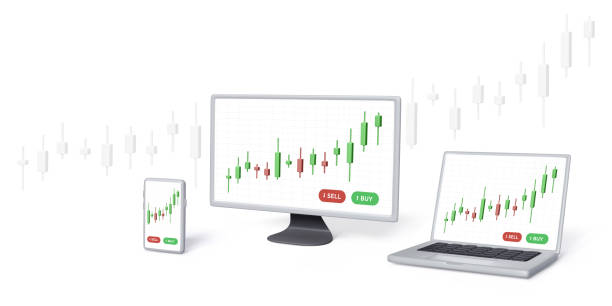

The decision to embark on the journey of binary options trading, often catalyzed by the sleek, minimalist interface of platforms like Stockity, represents a pivotal moment of perceived financial autonomy. However, the initial forays of many neophytes are less a methodical expedition and more a reckless scramble, frequently culminating in the rapid, dispiriting depletion of capital. This phase—the raw, untutored engagement with high-frequency speculation—is universally fraught with predictable psychological and strategic missteps. Understanding these initial vulnerabilities is not merely prudent; it is the sole prerequisite for survival in the binary options arena.
The Siren Song of Velocity and Simplicity
Stockity excels in presenting an instrument defined by its elemental clarity: will the asset move up (Call) or down (Put)? The all-or-nothing nature, paired with expiries that can clock in at a mere sixty seconds, is profoundly seductive. It appeals to a primal human inclination for immediate, decisive action. This structural simplicity, however, breeds the initial and most destructive mistake: the oversimplification of probability.
A beginner often views a binary option as a coin toss—a 50/50 event. This psychological framing is dangerously erroneous. Given a typical 85% payout, a trader must be correct over 54% of the time just to break even, accounting for the platform’s non-parity mathematical edge. The initial excitement of a few consecutive wins on the demo account or a low-stakes real account breeds illusory confidence, masking the critical need to maintain a win rate that is statistically superior to random chance. Without this critical self-assessment, the beginner is essentially subsidizing the system, one high-frequency trade at a time. .
The Tyranny of Emotional Overtrading
The speed of execution on Stockity acts as a potent psychological amplifier. When a trade is lost in a minute, the impulse to immediately compensate for the loss—the infamous “chasing losses” behavior—is overwhelming. This transforms the trading desk into an emotional crucible where rational strategy is abandoned in favor of reactive, impulsive wagers.
Newcomers, lacking a robust trading plan, fall victim to a cycle of hyper-activity. They execute excessive volumes of trades, a phenomenon known as overtrading, believing that sheer transactional frequency will somehow force a profit. This accelerates exposure to the market’s inherent volatility, treating minor market noise—the unpredictable, minute-to-minute fluctuations—as actionable signals. The successful outcome is then attributed to skill; the failure, to bad luck. This flawed attribution system ensures the beginner never learns the real lesson: discipline and capital preservation trump aggressive velocity. The initial foray, therefore, is frequently an expensive lesson in self-control, paid for in lost margin.
Regulatory Blind Spots and Risk Protocol Failure
A further misstep in these initial forays involves a fundamental disregard for the regulatory landscape and core risk management protocols. Many binary options brokers, including Stockity, operate under licenses that lack the stringent investor protections afforded by top-tier financial regulators in jurisdictions like the EU or the US. The beginner, focused on the immediate profit potential, often overlooks this regulatory opacity, inadvertently accepting substantial counterparty risk alongside market risk.
Furthermore, basic financial trading hygiene is neglected. The initial strategy often lacks an established Maximum Drawdown Threshold or a definitive Money Management Rule (e.g., never risking more than 2% of the total account balance on a single position). The small minimum deposit requirement on Stockity, while seemingly accessible, paradoxically encourages reckless high-percentage betting on the low initial capital. It is only after the initial deposit is swiftly evaporated that the necessity of a stringent, dispassionate risk calculus becomes painfully clear.
The initial experiences on platforms like Stockity are harsh, but they serve an indispensable purpose: they brutally strip away all assumptions of easy wealth. The true challenge is not navigating the platform’s features, but mastering the self—transforming from a hopeful gambler into a patient, mathematically informed speculator.
Before risking another dollar, shift your focus from predicting the market’s movements to rigorously managing your own capital and emotions. Develop a non-negotiable risk-management system and adhere to it without exception.