
📌 Introduction
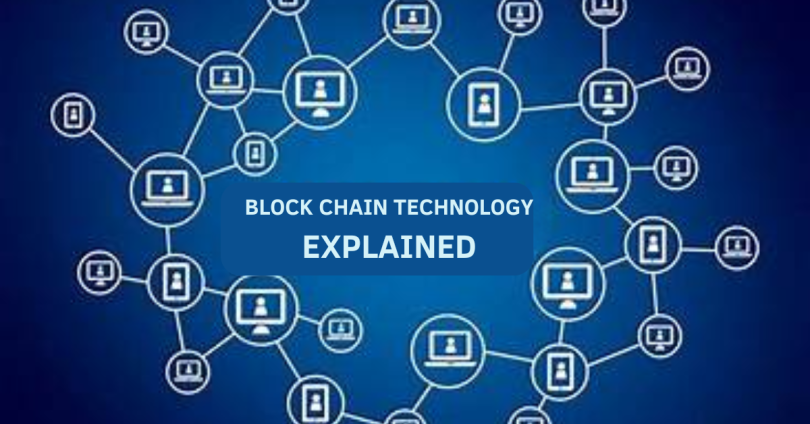
You’ve probably heard the term blockchain thrown around a lot—especially with Bitcoin, Ethereum, NFTs, or Web3. But what does it actually mean? In this article, we’ll have blockchain technology explained in a way that’s simple, conversational, and beginner-friendly.
Imagine a record book that everyone can see but no one can erase or secretly change. That’s essentially what blockchain is—a decentralized digital ledger that stores information securely across a network of computers.
🔍 What is Blockchain Technology?
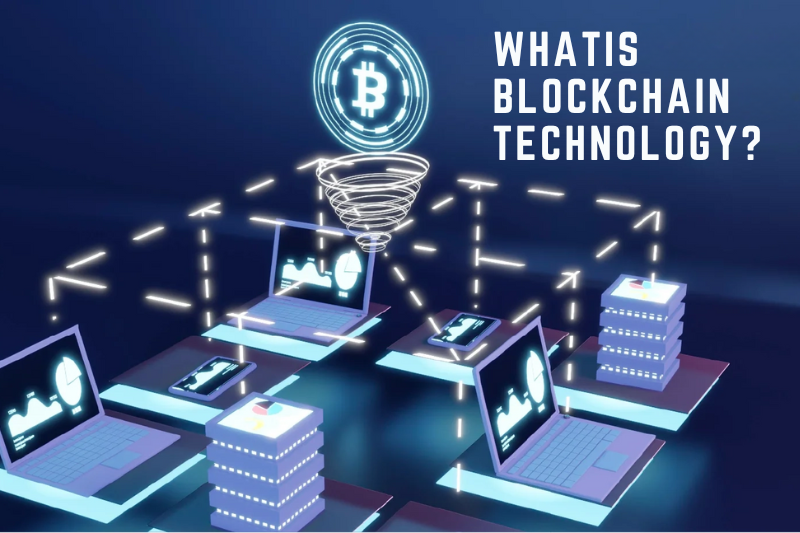
Blockchain is a type of distributed ledger technology (DLT) that stores data in a series of connected “blocks.” Each block contains:
- A list of transactions
- A timestamp
- A cryptographic hash (like a digital fingerprint)
- A reference to the previous block’s hash
These blocks are chained together, making any change nearly impossible without altering all subsequent blocks on every participant’s computer. This design makes blockchain secure, transparent, and resistant to tampering.
🛠 How Blockchain Works (Step-by-Step)
| Step | Description |
| 1. Transaction Initiation | A user initiates a transaction (e.g., sending cryptocurrency). |
| 2. Broadcasting | The transaction is broadcast to a peer-to-peer (P2P) network of nodes (computers). |
| 3. Validation | Nodes use consensus mechanisms (like Proof of Work or Proof of Stake) to validate the transaction. |
| 4. Block Formation | Validated transactions are grouped into a block. |
| 5. Linking & Hashing | Each new block references the previous block’s hash, creating a secure chain. |
| 6. Permanent Record | Once added, data in the block is immutable (cannot be changed). |
🧠 Types of Blockchain Networks
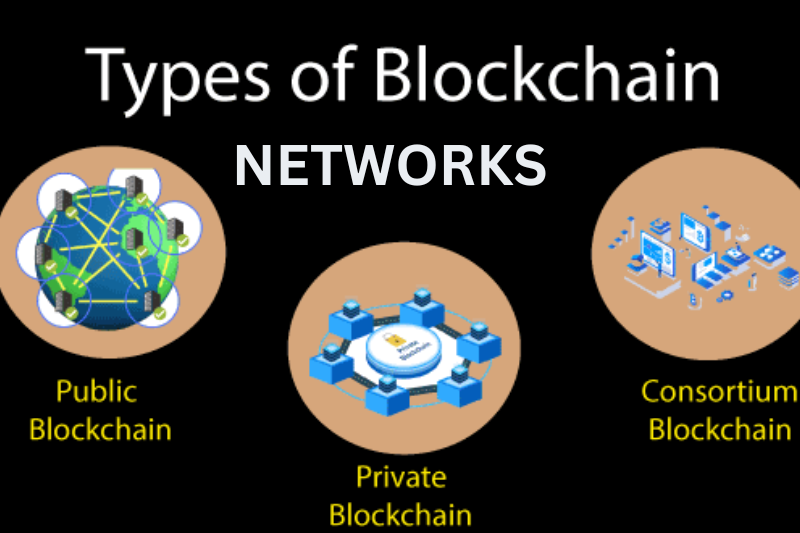
| Type | Access | Control | Example Use |
| Public Blockchain | Open to everyone | Decentralized | Bitcoin, Ethereum |
| Private Blockchain | Invite-only | Centralized | Internal business use |
| Consortium Blockchain | Limited group | Partially decentralized | Banking, Supply Chain |
| Hybrid Blockchain | Mix of public/private | Custom control | Government + public services |
💡 Smart Contracts: The Magic Behind Automation
Smart contracts are self-executing contracts written in code, stored and executed on the blockchain.
They automatically enforce rules and penalties once certain conditions are met.
Example:
You agree to rent your house via a smart contract. If the renter sends crypto payment by a specific date, the door unlocks automatically. No agent, no paperwork.
⚙ Common Use Cases in 2025
| Industry | Blockchain Use |
| Finance | Instant cross-border payments, tokenized assets |
| Healthcare | Patient record security and interoperability |
| Real Estate | Smart contracts for buying/selling properties |
| Supply Chain | Track origin of goods (Walmart, Maersk) |
| Gaming & NFTs | Play-to-earn economies, digital collectibles |
| Government | Voting systems, ID verification |
You may also like to read these posts:
https://techloomz.com/wp-admin/post.php?post=98&action=edit
https://techloomz.com/wp-admin/post.php?post=100&action=edit
https://techloomz.com/wp-admin/post.php?post=137&action=edit
https://techloomz.com/wp-admin/post.php?post=139&action=edit
✅ Benefits of Blockchain Technology
| Benefit | Details |
| Transparency | All participants can verify data without a central authority. |
| Security | Cryptographic hashing and decentralization prevent tampering. |
| Immutability | Once data is recorded, it cannot be altered or deleted. |
| Cost-Effective | Eliminates middlemen (banks, lawyers), reducing fees. |
| Efficiency | Faster settlement times—some within seconds. |
| Decentralization | No single point of failure; increases reliability. |
| Financial Inclusion | Enables access for unbanked populations globally. |
| Programmability | Automate business logic with smart contracts. |
❌ Drawbacks of Blockchain Technology
| Drawback | Details |
| Energy Consumption | Proof of Work chains (like Bitcoin) consume large amounts of electricity. |
| Scalability Issues | Most blockchains can’t yet process transactions as fast as traditional systems like Visa. |
| Complexity | Steep learning curve for non-technical users. |
| Irreversibility | Mistakes (wrong address, lost keys) are often permanent. |
| Regulatory Uncertainty | Legal status varies across countries and is often unclear. |
| Storage & Speed | Large chains can become slow and hard to store locally. |
| Hacking Risks | While blockchain is secure, smart contracts and apps built on it can have vulnerabilities. |
📚 Real-World Examples in 2025
| Company / Project | What They’re Doing with Blockchain |
| IBM & Maersk | Track shipments and logistics using blockchain to reduce fraud. |
| Walmart | Uses blockchain to trace food sources for food safety. |
| Uniswap, Aave (DeFi) | Offer decentralized lending and trading platforms. |
| Ethereum 2.0 | Transitioned to Proof of Stake to cut energy use. |
| OpenSea & Blur | NFT marketplaces enabling secure, decentralized ownership of digital art. |
| Pakistan Election Commission (pilot) | Testing blockchain-based voting systems. |
🚀 Future of Blockchain
The future looks promising with trends like:
- Green blockchains using less energy (Proof of Stake)
- CBDCs (Central Bank Digital Currencies) being tested by governments
- Interoperability between chains for smooth cross-network communication
- Tokenization of real-world assets like real estate, gold, and stocks
🎯 Final Thoughts
With blockchain technology explained in detail, we can now see it’s not just a trend—it’s a revolutionary shift in how we handle data, value, and trust online. Whether it’s changing how we vote, pay, or prove ownership, blockchain is quietly becoming the backbone of digital innovation in 2025 and beyond.
If you’re new to this space, start small: create a crypto wallet, try a decentralized app, or just follow how your favorite brands are using blockchain. It’s never too late to understand the tech that’s shaping the future.
❓ FAQs
Q1: What exactly is blockchain technology?
A: Blockchain is a secure digital ledger shared across a network of computers. It records data in blocks that are linked together in a chronological chain. Once a block is added, the information in it can’t be changed—making it transparent and tamper-proof.
Q2: Is blockchain only used for cryptocurrencies like Bitcoin?
A: No! While cryptocurrencies were the first major use case, blockchain is now used in many industries like supply chain tracking, healthcare, real estate, gaming, finance (DeFi), and even government voting systems.
Q3: Is blockchain safe and secure?
A: Yes, blockchain is considered very secure due to cryptography and decentralization. However, apps built on top of blockchains, like smart contracts or wallets, can be vulnerable if not properly coded or secured.
Q4: What is a smart contract?
A: A smart contract is a self-executing program stored on the blockchain. It runs automatically when certain conditions are met—no need for third parties like banks or lawyers.
Q5: Can blockchain data be changed or deleted?
A: No. One of blockchain’s biggest strengths is immutability. Once data is confirmed and added to the chain, it cannot be altered or removed.