
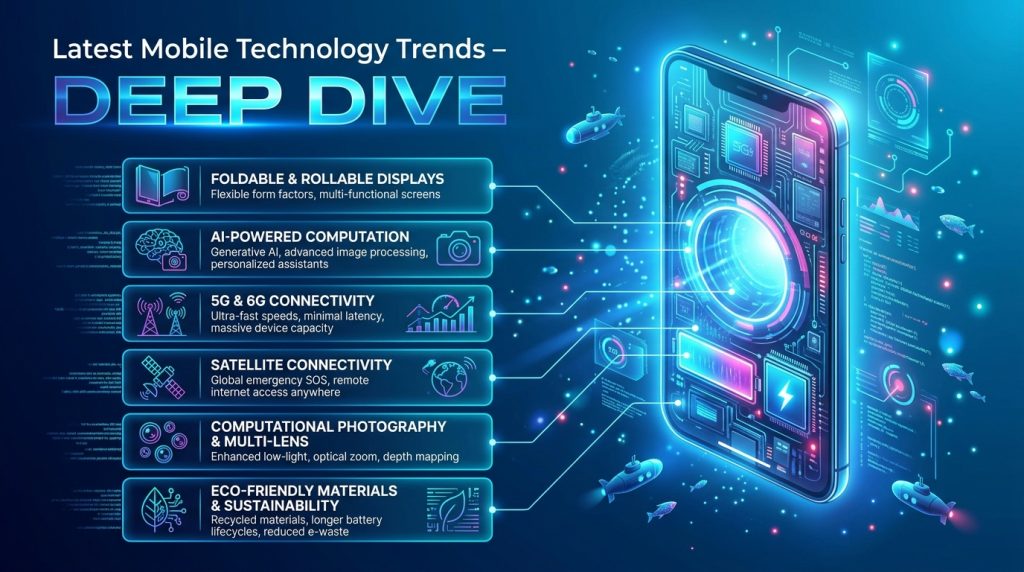
The smartphone is the most personal computer ever made, and it is still changing fast. The mobile technology trends shaping this year’s phones are less about raw speed — every modern handset is fast enough — and more about intelligence, flexibility and independence from cables, cards and even networks. On-device AI edits your photos and translates your calls, screens fold, SIM cards have become software, and satellites are starting to back up the mobile network. This guide walks through the mobile technology trends that will actually change how you use your phone.
On-Device AI Becomes the Main Event
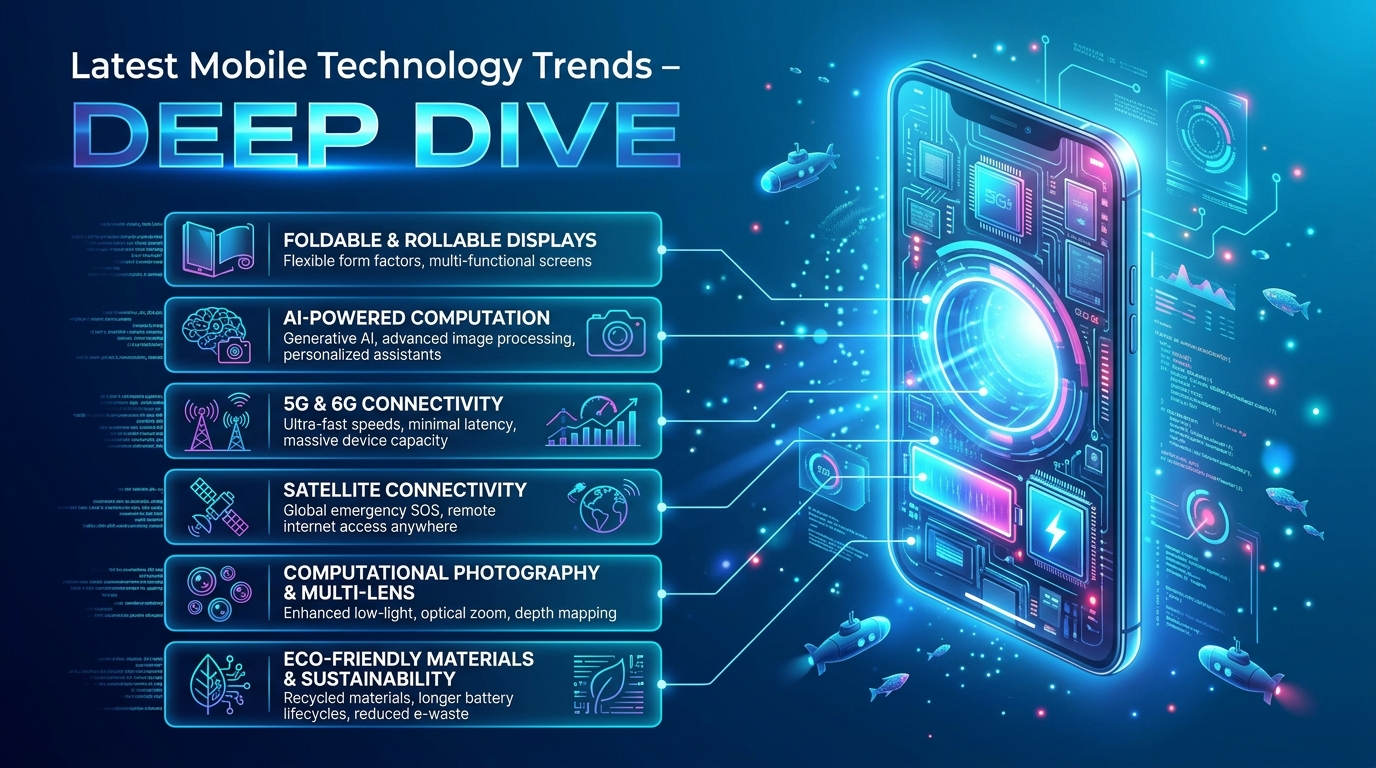
The defining shift is artificial intelligence moving onto the phone itself. Instead of sending everything to the cloud, modern chips process photos, voice and text locally. That means faster responses, features that work without a connection, and better privacy, because your data need not leave the device. Live call translation, instant photo cleanup, meeting summaries and writing assistance are early examples; expect them to become as ordinary as the camera.
Local AI also changes battery mathematics: small, specialised processors handle these tasks efficiently rather than waking the main chip for everything. When comparing phones, the AI feature list is now as relevant as the camera specification — and far more relevant than benchmark numbers you will never feel.
Foldables, Rollables and New Shapes
After years as expensive experiments, foldable phones have become durable, practical devices. Book-style foldables open into small tablets for reading, maps and split-screen work; flip models fold a full phone down to pocket size. Hinges survive hundreds of thousands of folds, and screens have grown tougher and brighter.
Whether the format suits you depends on your habits. Heavy readers, travellers who work from their phones, and anyone who juggles two apps at once gain the most. If your phone use is mostly calls, messages and one app at a time, a conventional slab remains lighter, cheaper and simpler — and there is no shame in that. Among mobile technology trends, foldables are an option, not an obligation.
eSIM, Satellite Links and the End of the Plastic Card
The physical SIM card is disappearing. eSIM lets you activate a plan by scanning a code, keep multiple numbers on one phone, and grab a local data plan when travelling without hunting for a shop at the airport. It also removes a common failure point and frees internal space for battery.
Even bigger is satellite connectivity. Current phones can already send emergency messages where no mobile signal exists, and basic texting via satellite is rolling out for ordinary use. For hikers, sailors, rural workers and anyone travelling beyond coverage, this is a safety feature of genuine consequence — the phone in your pocket becoming a lifeline anywhere on Earth.
Charging, Batteries and Longer Lives
Battery chemistry is inching forward — silicon-carbon cells pack more capacity into the same space — but the bigger story is charging. Many phones now refill most of a battery in fifteen to thirty minutes, which changes behaviour: instead of charging overnight, you top up while making coffee. Wireless charging has standardised around magnetic alignment, making accessories interchangeable across brands.
Longevity matters as much as capacity. Manufacturers increasingly promise five to seven years of software and security updates, and battery-health settings that slow ageing. Protecting that investment includes sensible security habits — monitoring your accounts, as our guide on keeping track of account activity explains, and being careful on public networks, the subject of our public Wi-Fi questions guide for readers. A phone kept for five years must be a phone kept secure for five years.
The Phone as Wallet, Key and ID
Mobile technology trends keep pulling everyday objects into the handset. Payment cards live in phone wallets, car keys and house keys are becoming digital credentials, and identity documents are beginning their slow migration to verified phone-based versions. Each migration removes friction — and concentrates risk. Losing your phone increasingly means losing your wallet, keys and ID at once, which is why strong device security, remote tracking and a tested backup plan are no longer optional extras.
The convenience is real, though. Travellers pass through airports with a phone and a passport; drivers unlock cars by walking up to them; event tickets, boarding passes and loyalty cards have already completed the journey. The next few years extend the same logic to health records and professional credentials.
Wearables and the Health Frontier
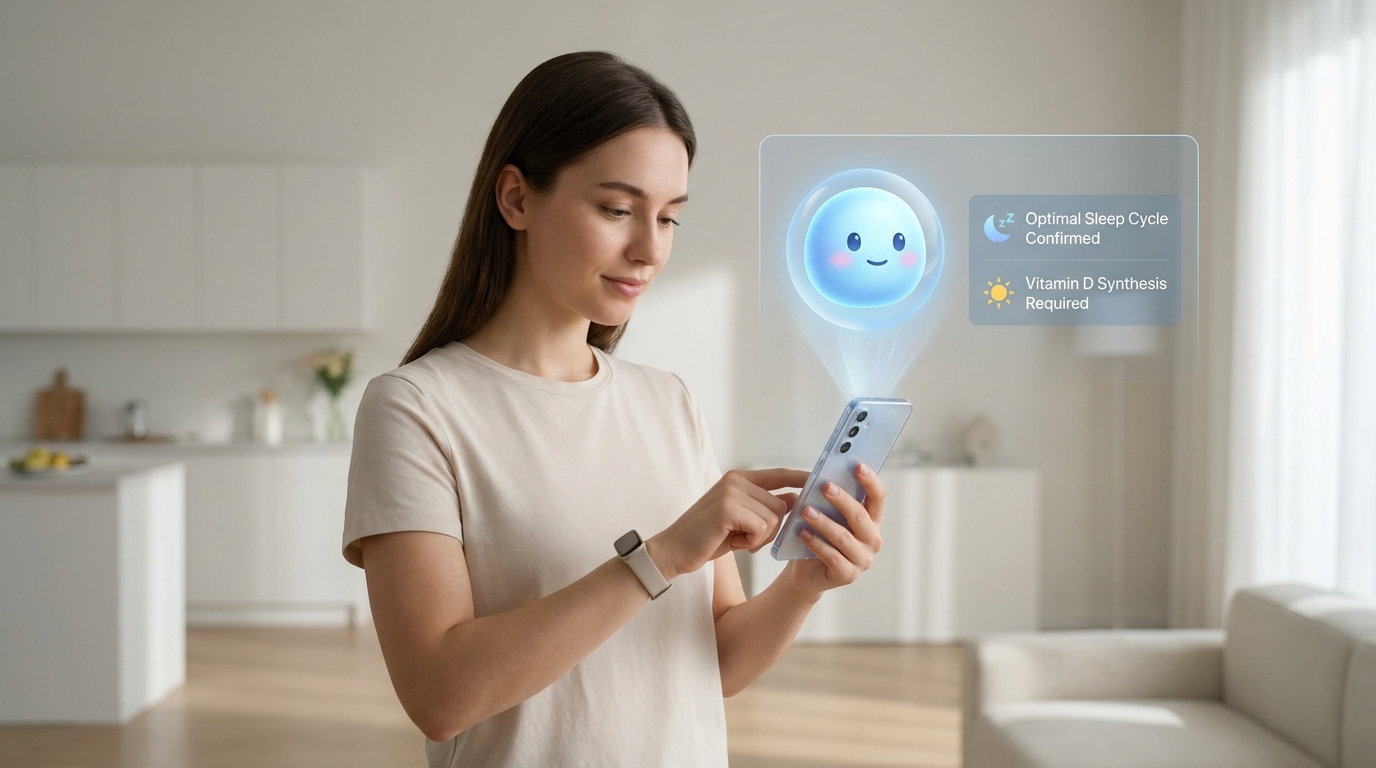
The phone’s closest companion is becoming a health instrument in its own right. Watches and rings now track sleep stages, heart-rate variability, blood oxygen and skin temperature, and the frontier has moved from collecting these numbers to interpreting them — flagging possible illness before symptoms, coaching recovery after training, and sharing structured summaries with your doctor rather than a bewildering graph. Regulators are beginning to approve specific measurements as medical-grade, which separates serious devices from wellness decoration.
The sensible buyer’s questions mirror those for phones: which measurements are validated, what happens to the data, and does the device still work fully without a subscription? Health data is the most sensitive data a consumer product collects, and it deserves the same scrutiny as your banking app. Chosen carefully, though, wearables are the clearest example of mobile technology improving something that matters — catching problems early, when they are cheapest and easiest to fix.
What to Do With All This as a Buyer
You do not need to chase every trend. Decide which two or three improvements would change your daily experience — perhaps battery life and camera, or a foldable screen for work — and let the rest go. Phones are now durable, long-supported tools; buying the model that fits your life and keeping it for four years is both the economical and the sensible play.
Watch the direction rather than the launch events. Intelligence on the device, freedom from physical cards and cables, and connectivity that works anywhere are the currents running through all the mobile technology trends above — and they will define your next phone, whichever badge it wears.
Conclusion
Mobile technology trends have shifted from faster chips to smarter, more independent phones: AI that runs locally, screens that fold, SIMs that are pure software, satellites that back up the network, and batteries that charge in minutes and last for years. Judged against your own habits, these are practical upgrades rather than novelties. Choose the ones that solve your real frustrations, secure the device that now holds your whole life, and your phone will keep feeling new long after the unboxing.