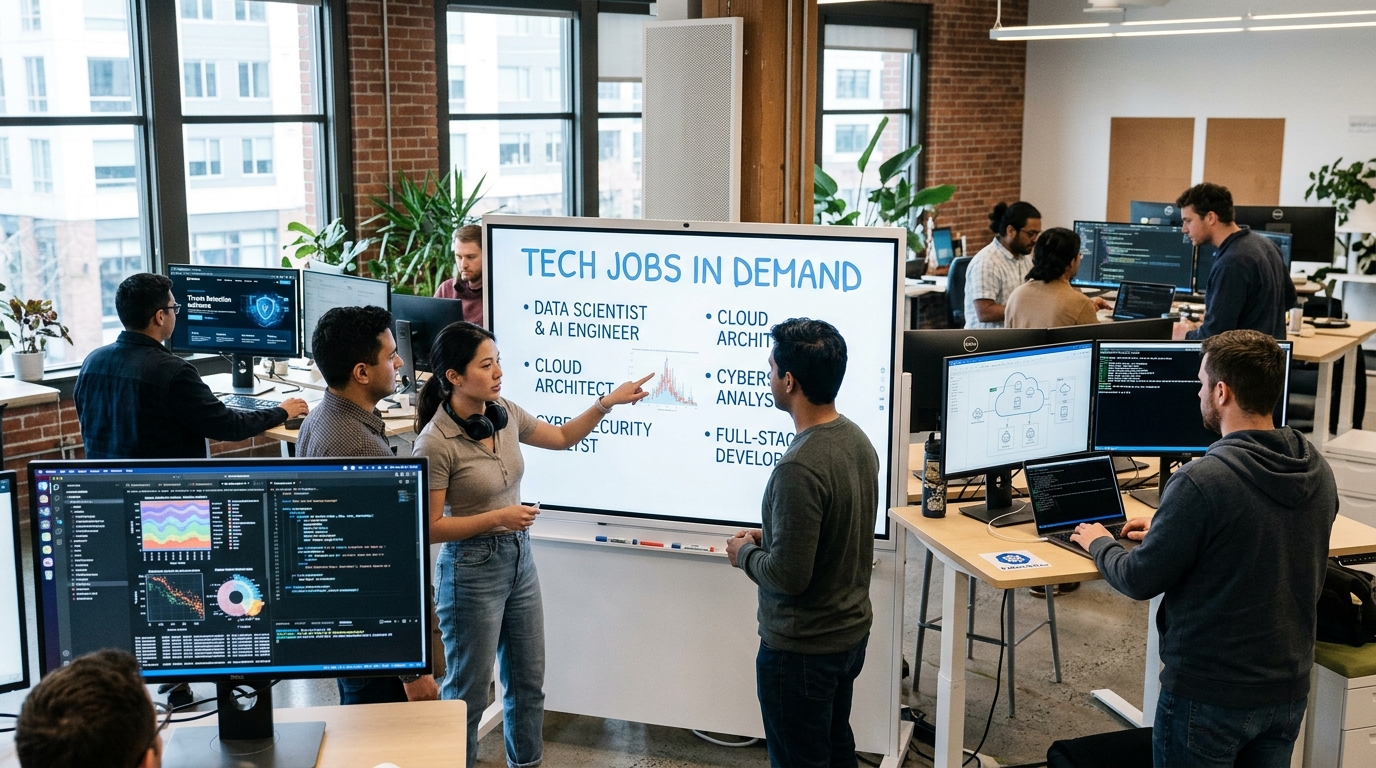

The technology industry is expanding rapidly in 2026, creating a huge demand for skilled professionals across artificial intelligence, cybersecurity, cloud computing, software development, and data science. As businesses continue digital transformation, companies are actively hiring experts who can build, manage, and secure modern digital systems, making tech careers one of the most stable and high-growth paths today.
Artificial Intelligence and Machine Learning Careers
Artificial intelligence and machine learning are among the fastest-growing tech fields in 2026. Companies are using AI to automate tasks, improve decision-making, and analyze large amounts of data, which has increased demand for AI engineers and machine learning specialists.
These professionals design intelligent systems that learn from data and improve performance over time. Strong programming skills and knowledge of algorithms are essential in this field, and demand is expected to grow even further in the coming years.
Cybersecurity Jobs for Digital Protection
Cybersecurity has become extremely important due to rising cyberattacks and data breaches worldwide. Organizations need skilled professionals to protect sensitive data and secure their digital infrastructure.
Cybersecurity experts work as ethical hackers, security analysts, and network defenders who identify vulnerabilities and prevent attacks. This field continues to grow as digital threats become more advanced.
Cloud Computing and DevOps Roles
Cloud computing has transformed how businesses store and manage data by shifting systems to scalable online platforms. This shift has increased demand for cloud engineers and architects.
DevOps professionals play a key role in automating software development and deployment processes, making systems faster and more efficient. Cloud skills are now essential in modern IT careers.
Software Development and Engineering Jobs
Software development remains a core part of the tech industry, responsible for building applications, websites, and digital platforms.
Full-stack developers, backend engineers, and mobile app developers are highly in demand as companies continue to expand their digital services.
Data Science and Analytics Careers
Data science is one of the most powerful fields in 2026 because companies rely heavily on data for decision-making. Data scientists analyze large datasets to extract meaningful insights.
They use programming tools, statistics, and visualization techniques to help businesses understand trends and improve performance.
Mobile App Development Opportunities
Mobile app development is growing rapidly due to increasing smartphone usage worldwide. Businesses need mobile applications to engage customers and provide services.
Developers build apps for Android and iOS platforms, and demand continues to rise as mobile-first solutions dominate the digital market.
Blockchain and Web3 Careers
Blockchain technology is expanding beyond cryptocurrency into finance, security, and digital identity systems.
Blockchain developers and Web3 engineers are in high demand as decentralized applications become more popular in global industries.
Importance of Soft Skills in Tech Careers
Along with technical skills, soft skills like communication, teamwork, and problem-solving are essential for success in tech careers.
Employers prefer professionals who can work effectively in teams and adapt to rapidly changing technologies.
Future of Tech Jobs
The future of tech jobs is extremely promising due to continuous innovation in AI, automation, and digital transformation.
Professionals who keep upgrading their skills will have strong career growth and better opportunities in the global job market.
FAQs
What are the most in-demand tech jobs in 2026
AI engineers, cybersecurity experts, cloud engineers, and data scientists are highly in demand
Do tech jobs require coding skills
Most tech roles require basic to advanced programming knowledge
Is cybersecurity a good career choice
Yes it is one of the fastest-growing and high-paying fields
Which tech job pays the highest salary
AI, data science, and cloud computing roles offer top salaries
Can beginners enter tech careers
Yes beginners can start with basic skills and grow gradually
Conclusion
Tech jobs in demand in 2026 show how fast the digital world is growing. With opportunities in AI, cybersecurity, cloud computing, and software development, the tech industry offers strong career paths for skilled professionals. Continuous learning and skill development are the keys to success in this evolving field.